We have some rather unusual news to share: Crossref fees are going down again. At its meeting in Paris earlier this month, the Crossref Board approved two further recommendations from the Resourcing Crossref for Future Sustainability (RCFS) project: effective 1st January 2027, we will reduce the majority of Content Registration fees for all 25,000 members, and remove fees for back-year records altogether.
Content Registration fees haven’t increased in around 20 years, and this is the first significant change to them in that time—downwards. Since these fees account for the largest share of Crossref’s revenue (around 60%), and since every member registers DOI records, these changes reach further than anything we’ve announced under the RCFS project so far.
The infrastructure that registers and distributes Crossref metadata has been running and growing for more than two decades. It now does considerably more than it was built to do, and it shows: two large, tightly coupled monoliths (Content System and REST API), where a change in one place risks breaking something in another.
In December 2026, we plan to publish new Crossref Member Practices which will set out the standards we expect all Crossref members to meet. From August to October 2026 we are consulting with our members on a draft of these Member Practices. This blog provides the background to this, and explains how you can share your views.
The Crossref community in India is as diverse as the region that it represents, comprising 1605 members, 11 sponsoring organisations, and 5 ambassadors, who between them cover the length and breadth of this country. Between November 2025 and March 2026, we organised three webinars focused on supporting this community with best metadata and publishing practices. We collaborated with the Directory of Open Access Journals (DOAJ) and the Committee on Publication Ethics (COPE) to embed understanding of metadata’s role in the greater context of publishing integrity.
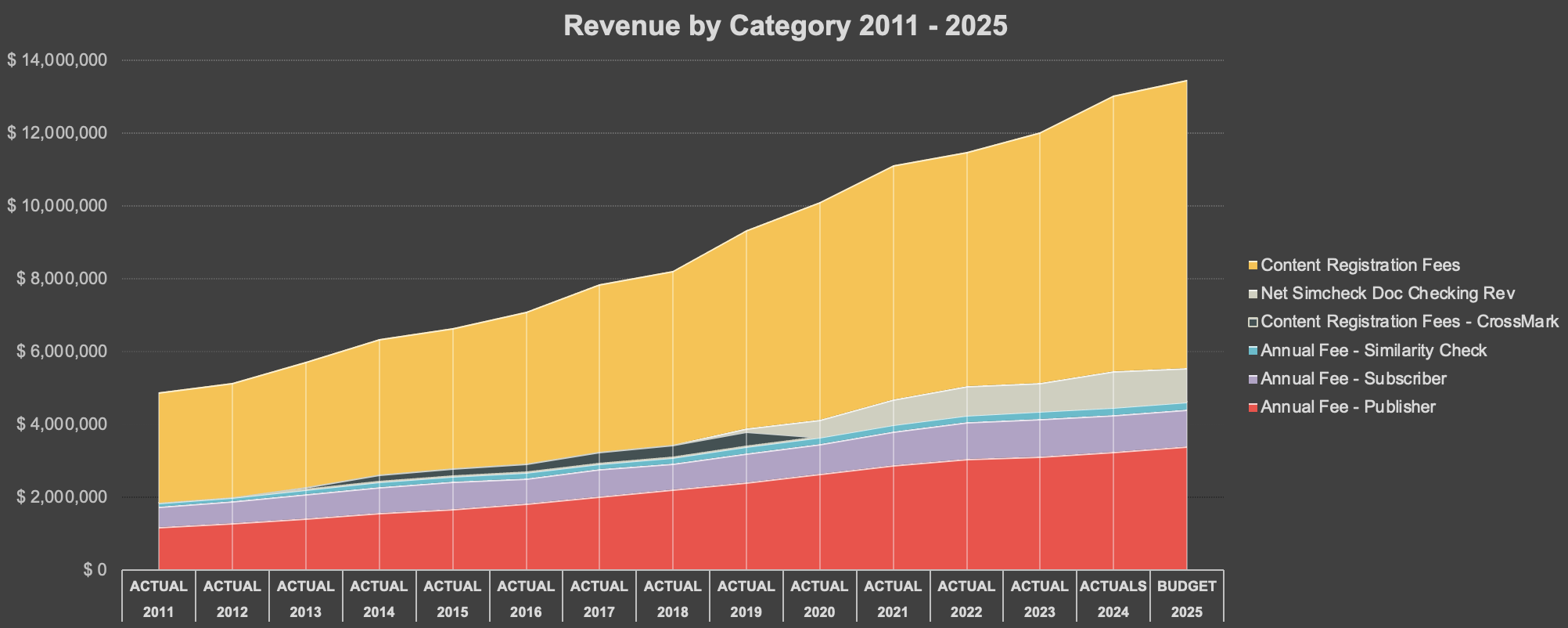
We operate on a budget of around $14 million (USD). About one-third of our revenue comes from annual dues (e.g., membership fees, subscriptions) and two-thirds from services (e.g., Content Registration, Similarly Check document checking). Our fees are set and reviewed by the Membership & Fees committee, which includes our staff, board, and community members. This group also created a set of fee principles which were approved by the board in 2019.
About 70% of our expenses are related to people - staff, benefits, and contracted support. 30% of our costs are everything else - hosting costs, licensing fees, events, and costs to do business like banking fees and insurance.
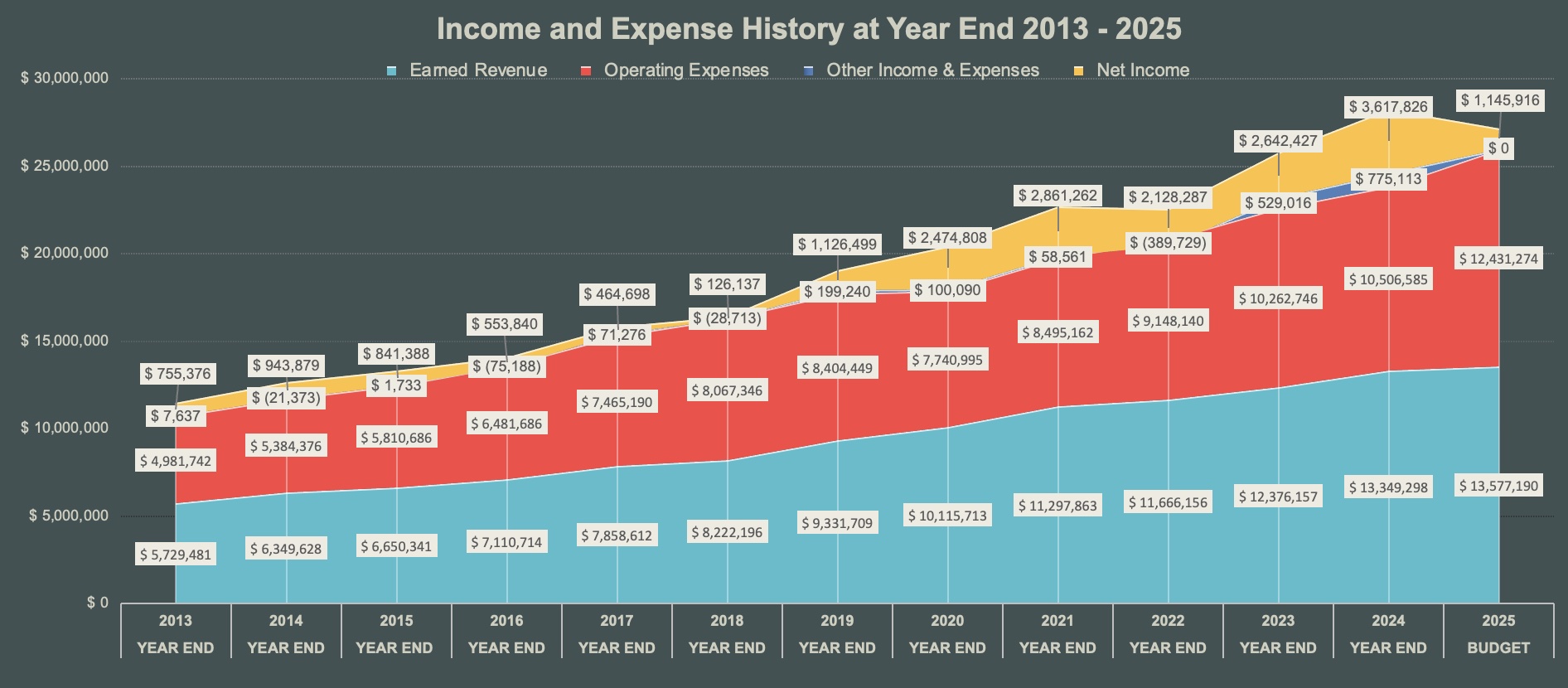
Each year we strive to generate a small operating net and have been able to do so nearly every year.
We also maintain a reserve fund to support long-term sustainability. We periodically report on our progress towards fulfilling the Principles of Open Scholarly Infrastructure: 2020, 2022, 2024
Below is a look at how our operations have changed over time.
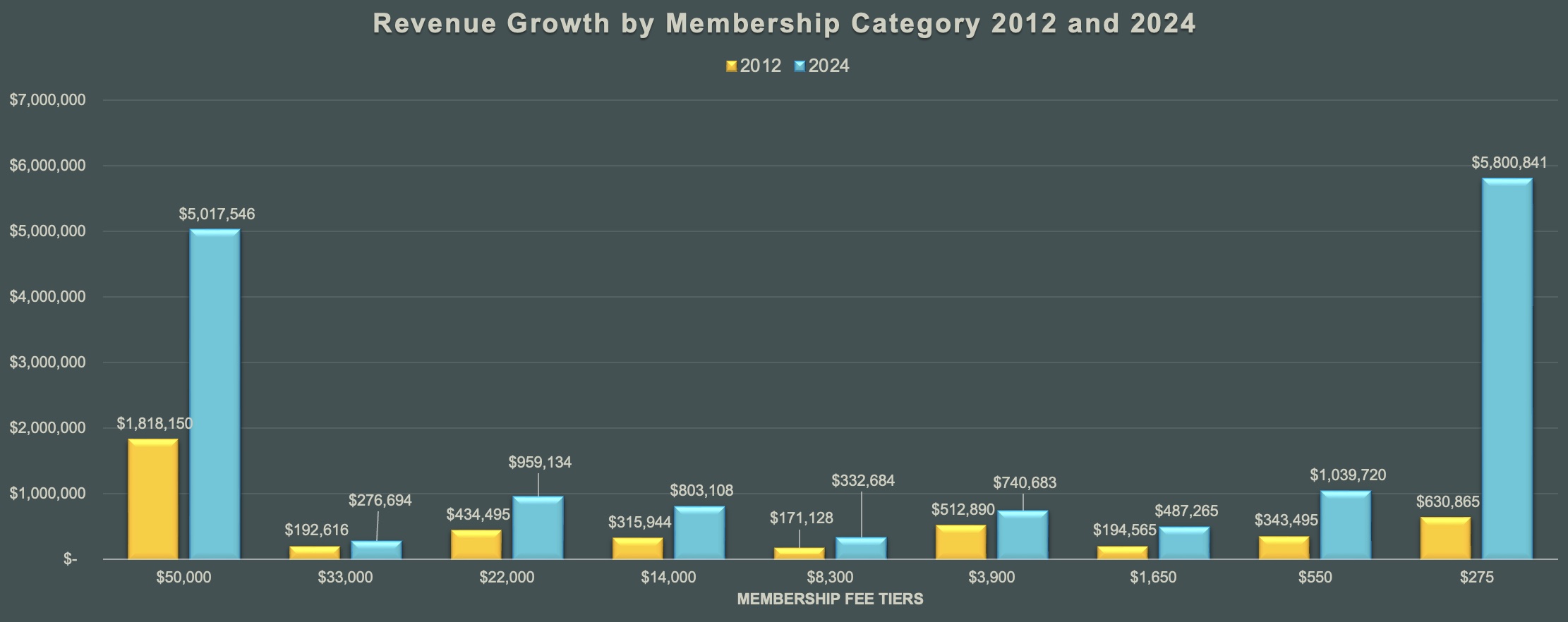
The majority of our revenue comes from members in smallest and largest tiers. We have seen the most growth in revenue from the smallest fee tier.F
Annual financial reporting
As a not-for-profit, we are tax-exempt, and to maintain that status, we undergo a financial audit each year by an independent accounting firm. Our auditors prepare our Form 990, which the US IRS requires and is made publicly available. It gives an overview of what we do, how we are governed, and detailed financial information.
Below are our recent Form 990s and audited financial statements.