Kornelia Korzec

Kornelia Korzec

Kornelia Korzec

Director of Community

Biography

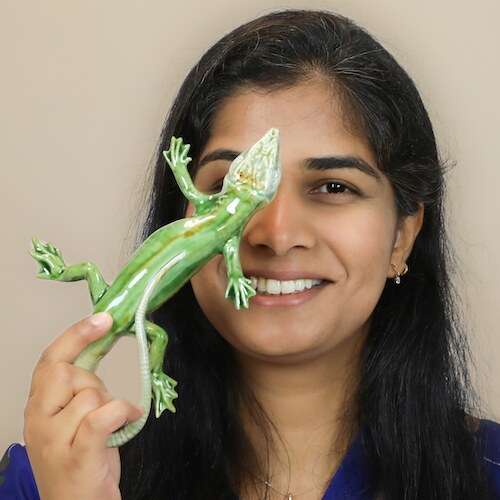
Kora joined Crossref in 2022 to ensure a community-centred approach across all communications. She previously worked at eLife, mobilising researchers to advocate for greater adoption of open science. Prior to that, Kora headed engagement at Engineering Without Borders UK, an international development charity, and before that – she designed behaviour-change campaigns for waste minimisation with local authorities in Cambridgeshire. Outside work, Kora enjoys spending time with her two little boys, working on a doctoral project on anti-consumerism, as well as climbing and dancing.

ORCID iD

0000-0002-4632-5228

Kornelia Korzec's latest writing

Fee update: lowering and removing DOI registration fees in January 2027

We have some rather unusual news to share: Crossref fees are going down again. At its meeting in Paris earlier this month, the Crossref Board approved two further recommendations from the Resourcing Crossref for Future Sustainability (RCFS) project: effective 1st January 2027, we will reduce the majority of Content Registration fees for all 25,000 members, and remove fees for back-year records altogether.

Content Registration fees haven’t increased in around 20 years, and this is the first significant change to them in that time—downwards. Since these fees account for the largest share of Crossref’s revenue (around 60%), and since every member registers DOI records, these changes reach further than anything we’ve announced under the RCFS project so far.

Why PID strategies need more than PIDs: our first position paper

PID strategies are being written around the world right now, and the decisions being made will shape the scholarly record for decades. After 25 years running open scholarly infrastructure—now on behalf of 25,000 members in 167 countries—Crossref has an informed perspective on what those decisions should ideally rest on. Today we’re setting it out in our first position paper: Persistent identifiers in research infrastructure policy: the need for a holistic approach. You can read it online or download the PDF; it’s a 16-minute read.

Building, refining, and connecting: summary of our May 2026 community update

Our 2026 Community Update took place on 13 May. Two calls, one for the eastern and one for the western time zone, highlighted how our global community is growing, how we’re refining the metadata that supports trust in the scholarly record, and connecting records more effectively through our latest tools.

Two billion citation links in Crossref help research travel further

Kornelia Korzec

Kornelia Korzec, Tuesday, May 26, 2026

In CitationMetadataResearch NexusSchema

Leave a comment

We’ve recently reached an important milestone for the research nexus: the works in our metadata corpus are now connected with over 2 billion citation links! This is a great opportunity to share a dedicated dataset and discuss why these are important for science.

On metadata enrichment

Metadata is communication; it can tell a story about research and paint a picture for others to respond to and learn from, across the world and throughout the forthcoming generations. Metadata can feel technical with words like ‘infrastructure’ and ‘schema’, and sometimes, like tech in general, it comes with hyperbole. But metadata really is part art (storytelling and pictures) and part science (structured models and standards) with both aspects being equally important, and requiring people as well as systems. That necessary combination of human and machine involvement also makes metadata challenging.

Read all of Kornelia Korzec's posts »